Musk Attacks Spain’s Prime Minister After Madrid Unveils Plan to Bar Under-16s From Social Media
Pedro Sánchez says platforms have become a “lawless” digital space and wants mandatory age checks, prompting a sharp backlash from X owner Elon Musk.
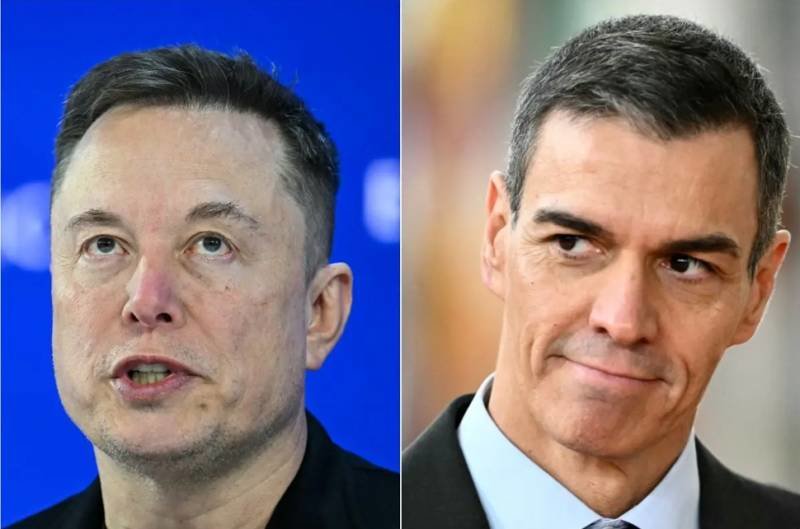
Spain’s prime minister, Pedro Sánchez, has announced plans to prohibit children under sixteen from accessing social media platforms, arguing that governments must impose enforceable safeguards to protect minors from online harm and to hold technology firms accountable.
Speaking at the World Governments Summit in Dubai, Sánchez described social media as a “failed state” in which laws are routinely ignored and harmful content spreads faster than verified information.
He said Spain would require “real barriers that work”, signalling a shift away from self-declared age tick-boxes towards tougher age-assurance systems.
The announcement triggered an immediate and personal response from Elon Musk, the owner of X, who posted an insult aimed at Sánchez and portrayed the Spanish leader as a “tyrant” and a “traitor” in remarks circulated widely online.
The exchange escalated an already tense debate between European governments and major US-based platforms over responsibility for content moderation, child protection and algorithm-driven amplification.
Sánchez’s proposals include stricter obligations on platforms to prevent minors from opening accounts and to deploy robust age verification.
He also used the Dubai appearance to intensify criticism of major platforms, linking the push for stronger regulation to concerns about disinformation, exploitation and the circulation of illegal material.
While the prime minister presented the initiative as urgent, the measures would still require legislative action and parliamentary approval before they could take effect.
The government is expected to pursue the changes through wider digital-protection reforms aimed at tightening oversight of platforms operating in Spain.
The Spanish move aligns with a growing international push to raise the threshold for youth access to social media.
Australia has already established a minimum age of sixteen for certain platforms, backed by enforcement powers and penalties that can reach up to forty-nine point five million Australian dollars for companies that fail to take reasonable steps to stop underage users from holding accounts.
Across Europe, policymakers are increasingly framing the issue as a public-health and child-safety challenge rather than a narrow privacy question.
Supporters of age-based restrictions argue that technology has outpaced existing protections and that stronger rules are needed to reduce exposure to exploitation, addictive design and harmful content.
Technology companies have argued that blanket bans risk pushing teenagers to less visible corners of the internet and have urged governments to focus on broader safety tools.
Spain, however, is signalling that it wants responsibility placed squarely on platforms to prove they can enforce meaningful limits rather than simply publish age policies.
Separate internet-safety reporting in Israel has also underscored the scale of online harms facing users and the increasing sophistication of fraud linked to generative artificial intelligence, adding momentum to calls for more practical safeguards for minors and families.
Israeli safety responders have reported strong success rates when platforms act on formal removal requests, while warning that ordinary users often struggle to navigate automated reporting systems without support.
Speaking at the World Governments Summit in Dubai, Sánchez described social media as a “failed state” in which laws are routinely ignored and harmful content spreads faster than verified information.
He said Spain would require “real barriers that work”, signalling a shift away from self-declared age tick-boxes towards tougher age-assurance systems.
The announcement triggered an immediate and personal response from Elon Musk, the owner of X, who posted an insult aimed at Sánchez and portrayed the Spanish leader as a “tyrant” and a “traitor” in remarks circulated widely online.
The exchange escalated an already tense debate between European governments and major US-based platforms over responsibility for content moderation, child protection and algorithm-driven amplification.
Sánchez’s proposals include stricter obligations on platforms to prevent minors from opening accounts and to deploy robust age verification.
He also used the Dubai appearance to intensify criticism of major platforms, linking the push for stronger regulation to concerns about disinformation, exploitation and the circulation of illegal material.
While the prime minister presented the initiative as urgent, the measures would still require legislative action and parliamentary approval before they could take effect.
The government is expected to pursue the changes through wider digital-protection reforms aimed at tightening oversight of platforms operating in Spain.
The Spanish move aligns with a growing international push to raise the threshold for youth access to social media.
Australia has already established a minimum age of sixteen for certain platforms, backed by enforcement powers and penalties that can reach up to forty-nine point five million Australian dollars for companies that fail to take reasonable steps to stop underage users from holding accounts.
Across Europe, policymakers are increasingly framing the issue as a public-health and child-safety challenge rather than a narrow privacy question.
Supporters of age-based restrictions argue that technology has outpaced existing protections and that stronger rules are needed to reduce exposure to exploitation, addictive design and harmful content.
Technology companies have argued that blanket bans risk pushing teenagers to less visible corners of the internet and have urged governments to focus on broader safety tools.
Spain, however, is signalling that it wants responsibility placed squarely on platforms to prove they can enforce meaningful limits rather than simply publish age policies.
Separate internet-safety reporting in Israel has also underscored the scale of online harms facing users and the increasing sophistication of fraud linked to generative artificial intelligence, adding momentum to calls for more practical safeguards for minors and families.
Israeli safety responders have reported strong success rates when platforms act on formal removal requests, while warning that ordinary users often struggle to navigate automated reporting systems without support.
AI Disclaimer: An advanced artificial intelligence (AI) system generated the content of this page on its own. This innovative technology conducts extensive research from a variety of reliable sources, performs rigorous fact-checking and verification, cleans up and balances biased or manipulated content, and presents a minimal factual summary that is just enough yet essential for you to function as an informed and educated citizen. Please keep in mind, however, that this system is an evolving technology, and as a result, the article may contain accidental inaccuracies or errors. We urge you to help us improve our site by reporting any inaccuracies you find using the "Contact Us" link at the bottom of this page. Your helpful feedback helps us improve our system and deliver more precise content. When you find an article of interest here, please look for the full and extensive coverage of this topic in traditional news sources, as they are written by professional journalists that we try to support, not replace. We appreciate your understanding and assistance.