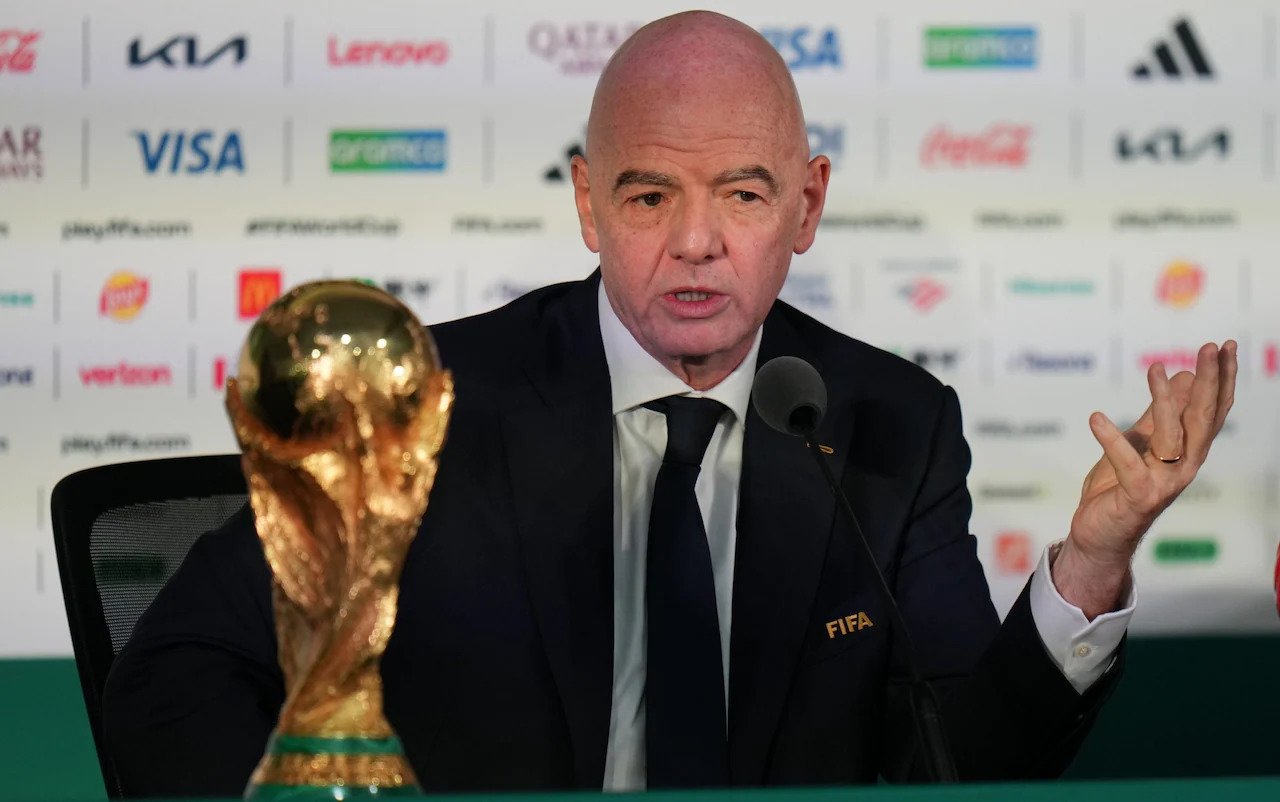
FIFA’s Private-Investment Plan for World Cup Rights Draws European Revolt
Gianni Infantino’s proposed commercial subsidiary would seek up to 4.2 billion dollars from minority investors while FIFA says it would retain complete sporting control.
FIFA’s proposed sale of minority interests in a new commercial vehicle for the World Cup and its other leading competitions has triggered an unusually fierce confrontation with European football, which argues that the plan risks placing the game’s most valuable assets under private financial pressure.
The proposal centres on a new FIFA-owned subsidiary, FIFA Forward Enterprise, or FFE.
It would combine the commercial and event-management operations of the men’s and women’s World Cups, the Club World Cup and other FIFA tournaments.
Investors would be invited to buy minority, non-controlling stakes, enabling the venture to raise up to 4.2 billion dollars later this year at an implied valuation of 20 billion dollars.
FIFA’s case is that the structure would unlock capital for football development without surrendering authority over the game.
It says it would retain majority board representation and sole control over governance, competitions, the international calendar and sporting regulation.
The governing body also says that all net benefits generated by FFE would be reinvested in football rather than distributed as profits to investors.
That distinction lies at the heart of the dispute.
FIFA is not proposing to sell itself, nor has it announced the outright sale of the World Cup.
It is proposing to place commercial rights and tournament operations inside a subsidiary, then sell minority stakes in that subsidiary to outside investors.
Critics contend that the formal retention of control does not remove the commercial incentives that would accompany private ownership of a share of the enterprise.
Gianni Infantino, FIFA’s president, has presented the plan as a means of redistributing football’s wealth beyond its richest leagues and national associations.
Under the proposal, each of FIFA’s 211 member associations could receive an optional one-off allocation of up to 20 million dollars for special projects, alongside higher development funding over subsequent four-year cycles.
FIFA says the wider programme could lift its planned development support above 10 billion dollars over the next four years.
The potential beneficiaries include smaller associations that lack the broadcasting income, infrastructure and commercial networks enjoyed by Europe’s largest football nations.
For them, the prospect of immediate capital for training centres, stadiums, grassroots programmes, women’s football and national-team development is likely to carry considerable weight when the proposal reaches a vote.
European football’s governing body, UEFA, has condemned the plan in stark terms, saying that the commercialisation of football’s global governance has crossed a line.
Its objection is not limited to the ownership percentage.
UEFA has challenged the transparency of the process, the identity and incentives of prospective investors, and the possibility that the financial logic of a private vehicle could influence decisions over tournament frequency, hosting, scheduling and expansion.
The concern is sharpened by the commercial power of the World Cup.
Its broadcasting, sponsorship, ticketing and licensing rights generate much of FIFA’s revenue and provide the financial foundation for its development programmes.
Putting those assets into a separately capitalised business could increase their value, but it could also create pressure to stage more competitions, enlarge tournaments or extract more from clubs, broadcasters, sponsors and supporters.
A World Cup boycott by European teams has been raised as a possible form of resistance, but no national association has announced such a decision.
Any collective withdrawal would be an extraordinary escalation, carrying sporting, legal and political consequences for the associations involved.
European representatives are expected to discuss their options, including legal challenges and coordinated objections within FIFA’s governance structures.
The proposal has also attracted political criticism in Britain.
Prime Minister Andy Burnham said that football belongs to supporters and communities rather than investors, and argued that selling a portion of the World Cup’s commercial structure would amount to selling out the competition.
His intervention echoes the reaction to the failed European Super League project in 2021, when governments, fans, clubs and football authorities combined to oppose a closed competition designed around elite commercial interests.
The comparison has limits.
The Super League proposal sought to alter the competitive structure of club football by establishing a largely closed tournament.
FIFA’s plan would retain existing competition governance and seek capital for a commercial subsidiary.
Yet both controversies expose the same underlying anxiety: that football’s institutions may reshape the game around financial value while supporters, players and domestic competitions bear the consequences.
Thrive Eternal, a permanent-capital investment company led by Joshua Kushner, is expected to lead the proposed investor group if the project receives the required approvals.
Kushner is the younger brother of Jared Kushner, Donald Trump’s son-in-law, but FIFA has said Jared Kushner is not an investor.
The process is being advised by JPMorgan, which was also involved in financing discussions around the aborted Super League project.
FIFA says it is seeking a geographically diversified group of long-term investors from Europe, the Americas, Asia and Africa.
That could include sovereign wealth funds, institutional investors and private-capital groups.
Saudi Arabia and Qatar are likely to be closely watched because of their existing influence in global sport and their relationships with FIFA, though no final investor group has been announced.
The plan revives a strategic argument that has followed Infantino for years.
In 2018, FIFA considered a 25 billion dollar proposal involving outside investors for a revamped Club World Cup and a global Nations League.
That initiative collapsed amid resistance from within football.
The current structure is more carefully framed around a FIFA-controlled subsidiary and development funding, but it faces many of the same questions over accountability and commercial influence.
FIFA’s statutes require the support of a majority of member associations and approval of relevant regulatory changes by the FIFA Council before the new entity can be launched.
The vote will test whether the promise of substantial funding for smaller football nations outweighs the opposition of Europe’s established powers.
The immediate consequence is a widening institutional rift between FIFA and UEFA.
The next step is the member-association consultation and approval process, which will determine whether FFE becomes the financial engine of world football’s next era or another abandoned attempt to monetise its most prized competitions.
The proposal centres on a new FIFA-owned subsidiary, FIFA Forward Enterprise, or FFE.
It would combine the commercial and event-management operations of the men’s and women’s World Cups, the Club World Cup and other FIFA tournaments.
Investors would be invited to buy minority, non-controlling stakes, enabling the venture to raise up to 4.2 billion dollars later this year at an implied valuation of 20 billion dollars.
FIFA’s case is that the structure would unlock capital for football development without surrendering authority over the game.
It says it would retain majority board representation and sole control over governance, competitions, the international calendar and sporting regulation.
The governing body also says that all net benefits generated by FFE would be reinvested in football rather than distributed as profits to investors.
That distinction lies at the heart of the dispute.
FIFA is not proposing to sell itself, nor has it announced the outright sale of the World Cup.
It is proposing to place commercial rights and tournament operations inside a subsidiary, then sell minority stakes in that subsidiary to outside investors.
Critics contend that the formal retention of control does not remove the commercial incentives that would accompany private ownership of a share of the enterprise.
Gianni Infantino, FIFA’s president, has presented the plan as a means of redistributing football’s wealth beyond its richest leagues and national associations.
Under the proposal, each of FIFA’s 211 member associations could receive an optional one-off allocation of up to 20 million dollars for special projects, alongside higher development funding over subsequent four-year cycles.
FIFA says the wider programme could lift its planned development support above 10 billion dollars over the next four years.
The potential beneficiaries include smaller associations that lack the broadcasting income, infrastructure and commercial networks enjoyed by Europe’s largest football nations.
For them, the prospect of immediate capital for training centres, stadiums, grassroots programmes, women’s football and national-team development is likely to carry considerable weight when the proposal reaches a vote.
European football’s governing body, UEFA, has condemned the plan in stark terms, saying that the commercialisation of football’s global governance has crossed a line.
Its objection is not limited to the ownership percentage.
UEFA has challenged the transparency of the process, the identity and incentives of prospective investors, and the possibility that the financial logic of a private vehicle could influence decisions over tournament frequency, hosting, scheduling and expansion.
The concern is sharpened by the commercial power of the World Cup.
Its broadcasting, sponsorship, ticketing and licensing rights generate much of FIFA’s revenue and provide the financial foundation for its development programmes.
Putting those assets into a separately capitalised business could increase their value, but it could also create pressure to stage more competitions, enlarge tournaments or extract more from clubs, broadcasters, sponsors and supporters.
A World Cup boycott by European teams has been raised as a possible form of resistance, but no national association has announced such a decision.
Any collective withdrawal would be an extraordinary escalation, carrying sporting, legal and political consequences for the associations involved.
European representatives are expected to discuss their options, including legal challenges and coordinated objections within FIFA’s governance structures.
The proposal has also attracted political criticism in Britain.
Prime Minister Andy Burnham said that football belongs to supporters and communities rather than investors, and argued that selling a portion of the World Cup’s commercial structure would amount to selling out the competition.
His intervention echoes the reaction to the failed European Super League project in 2021, when governments, fans, clubs and football authorities combined to oppose a closed competition designed around elite commercial interests.
The comparison has limits.
The Super League proposal sought to alter the competitive structure of club football by establishing a largely closed tournament.
FIFA’s plan would retain existing competition governance and seek capital for a commercial subsidiary.
Yet both controversies expose the same underlying anxiety: that football’s institutions may reshape the game around financial value while supporters, players and domestic competitions bear the consequences.
Thrive Eternal, a permanent-capital investment company led by Joshua Kushner, is expected to lead the proposed investor group if the project receives the required approvals.
Kushner is the younger brother of Jared Kushner, Donald Trump’s son-in-law, but FIFA has said Jared Kushner is not an investor.
The process is being advised by JPMorgan, which was also involved in financing discussions around the aborted Super League project.
FIFA says it is seeking a geographically diversified group of long-term investors from Europe, the Americas, Asia and Africa.
That could include sovereign wealth funds, institutional investors and private-capital groups.
Saudi Arabia and Qatar are likely to be closely watched because of their existing influence in global sport and their relationships with FIFA, though no final investor group has been announced.
The plan revives a strategic argument that has followed Infantino for years.
In 2018, FIFA considered a 25 billion dollar proposal involving outside investors for a revamped Club World Cup and a global Nations League.
That initiative collapsed amid resistance from within football.
The current structure is more carefully framed around a FIFA-controlled subsidiary and development funding, but it faces many of the same questions over accountability and commercial influence.
FIFA’s statutes require the support of a majority of member associations and approval of relevant regulatory changes by the FIFA Council before the new entity can be launched.
The vote will test whether the promise of substantial funding for smaller football nations outweighs the opposition of Europe’s established powers.
The immediate consequence is a widening institutional rift between FIFA and UEFA.
The next step is the member-association consultation and approval process, which will determine whether FFE becomes the financial engine of world football’s next era or another abandoned attempt to monetise its most prized competitions.
AI Disclaimer: An advanced artificial intelligence (AI) system generated the content of this page on its own. This innovative technology conducts extensive research from a variety of reliable sources, performs rigorous fact-checking and verification, cleans up and balances biased or manipulated content, and presents a minimal factual summary that is just enough yet essential for you to function as an informed and educated citizen. Please keep in mind, however, that this system is an evolving technology, and as a result, the article may contain accidental inaccuracies or errors. We urge you to help us improve our site by reporting any inaccuracies you find using the "Contact Us" link at the bottom of this page. Your helpful feedback helps us improve our system and deliver more precise content. When you find an article of interest here, please look for the full and extensive coverage of this topic in traditional news sources, as they are written by professional journalists that we try to support, not replace. We appreciate your understanding and assistance.